

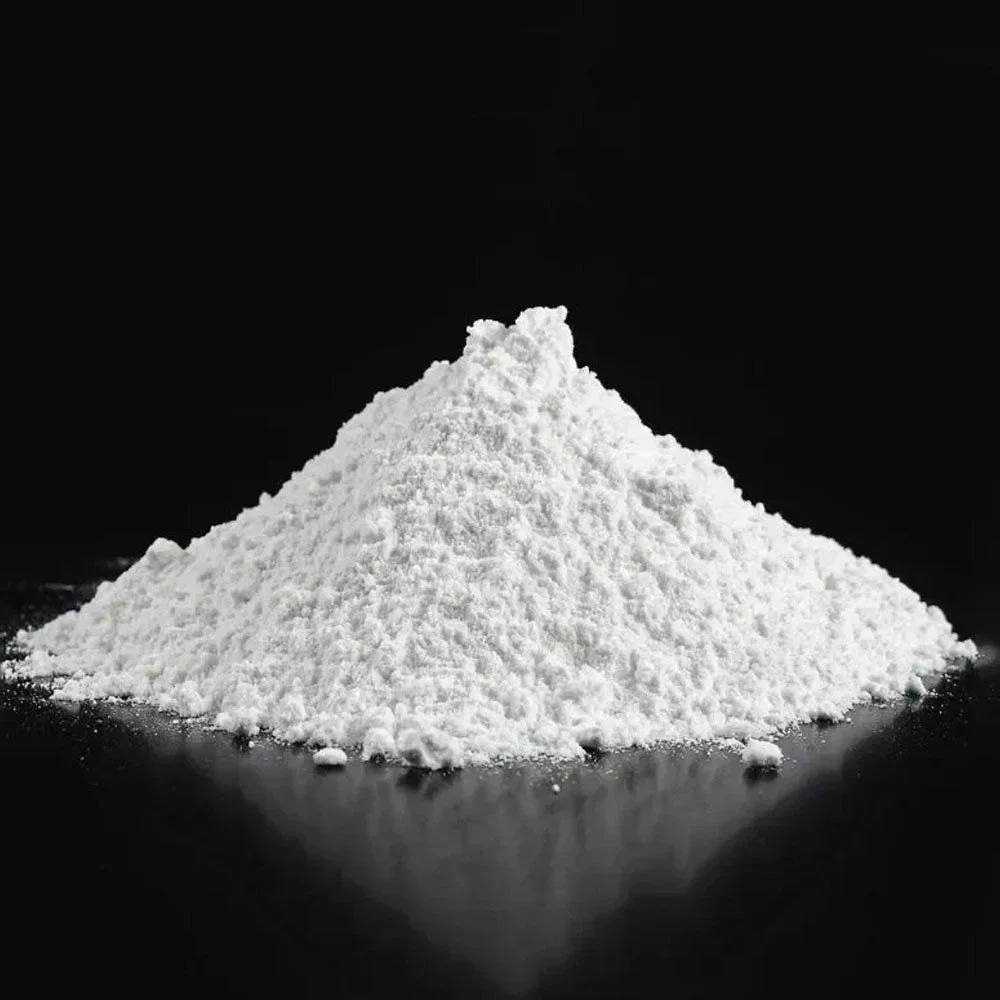
Paint Grade
Dolomite Powder
Up to 98% whiteness and 325 mesh as standard, with custom mesh from 300 to 800. A high whiteness dolomite powder for paints, wall putty, primers and industrial coatings.
Paint Grade Dolomite Powder
For Paint & Coating Formulations
Dolomite is a naturally occurring double carbonate of calcium and magnesium, written as CaMg(CO3)2. When the rock is selected for colour, crushed, dried and ground to a controlled fineness, the result is paint grade dolomite powder: a white mineral used as a functional filler and extender in decorative paints, primers, coatings and wall putty.
Vrindavan Minerals supplies paint grade dolomite powder with whiteness up to 98%, a standard 325 mesh grade and custom mesh from 300 to 800 for formulators who need a bright, consistent, low-moisture mineral. Unlike plain calcium carbonate, dolomite carries magnesium carbonate in its structure, which makes it a somewhat harder mineral that many formulators prefer for exterior paints, primers and putty.
Bright & Stable
Suited to formulations that need a clean shade, smooth texture and dependable consistency.
Paint Grade Dolomite Powder Specifications
| Parameter | Typical Value |
|---|---|
| Whiteness | Up to 98% |
| Mesh Grade | 325 Mesh (custom mesh from 300 to 800 available) |
| Combined CaCO3 + MgCO3 | 97% and above |
| Moisture Content | Below 0.5% |
| Iron Content (Fe2O3) | Low, non color-interfering |
| Oil Absorption & Particle Size | Vary with mesh grade. Request values for your required mesh. |
| Mineral | Natural calcium magnesium carbonate, CaMg(CO3)2 |
| Packaging | 25 kg / 50 kg HDPE bags, jumbo bags on request | Why Paint Makers Choose Our Product
Values are typical and may vary by batch. Request a current test certificate for your specific mesh and grade requirement.
What Is Paint Grade Dolomite Powder?
Paint grade dolomite powder is a finely ground natural mineral made of calcium magnesium carbonate. It is mined as rock, selected for colour and purity, then crushed, dried and ground to a defined fineness. The words “paint grade” mean the powder is controlled for what a coating cares about most: brightness, particle size, moisture and low coloured impurities. It is a type of industrial dolomite powder, but with tighter control than the grades sold for agriculture or metallurgy.
Chemical Composition and Mineral Properties
Ideal dolomite works out to roughly 54% calcium carbonate (CaCO3) and 46% magnesium carbonate (MgCO3) by mass. Commercial powders sit slightly off these figures because natural rock carries small amounts of silica, iron and other minerals. Industry literature for paint grades commonly quotes about 50-56% CaCO3 and 40-45% MgCO3. Dolomite is also a little harder than calcite, around 3.5 to 4 on the Mohs scale against about 3, with a density near 2.84 g/cm3. That hardness is one reason it holds up well as a filler in putty, primers and textured coatings.
The table below keeps general industry reference ranges separate from the typical values Vrindavan Minerals states for its own product, so the two are never confused.
| Parameter | General Industry Reference | Vrindavan Minerals Typical |
|---|---|---|
| CaCO3 | About 50-56% | Stated as combined figure below |
| MgCO3 | About 40-45% | Stated as combined figure below |
| Combined CaCO3 + MgCO3 | Depends on impurity level | 97% and above |
| Whiteness | About 95-98% or higher, by grade | Up to 98% |
| Mesh Size | Chosen to suit the formulation | 325 standard, custom 300 to 800 |
| Moisture | Kept low, commonly 0.5% or less | Below 0.5% |
Quality Parameters For Paint Manufacturers
Five properties decide how a dolomite powder behaves in a paint or putty line. Compare them at the same mesh before comparing prices.
Whiteness
Whiteness decides how much a filler dulls pigment. A high whiteness dolomite powder lets colours show their true shade, which matters most in white and pastel formulations. Vrindavan Minerals offers up to 98%. Always confirm the instrument and scale used to report the figure.
Mesh Size and Particle Size
A 325 mesh powder passes a sieve with openings of about 44 microns. Mesh numbers above 400 are often quoted loosely, so also ask for median particle size (D50) or residue on sieve. Finer dolomite powder mesh sizes give a smoother film, while coarser grades add body in putty and textured coatings.
Moisture Content
Excess moisture causes lumping, poor flow in dry-mix putty and storage problems. Vrindavan Minerals keeps moisture below 0.5%, and inner-lined HDPE bags help protect the powder in transit and storage.
Oil Absorption
Oil absorption shows how much binder or vehicle a filler soaks up before it is wetted out. Lower values leave more binder free to form the film, which helps control cost and consistency. Oil absorption usually rises as the powder gets finer, so request the value for your required mesh.
Purity and Impurities
A combined CaCO3 + MgCO3 of 97% and above means very little non-carbonate material. Acid-insoluble matter, iron and heavy metals affect shade, abrasion and compliance, so ask for them on the test report. The Indian standard for dolomite used as a paint extender, IS 15366, is a useful reference for the parameters a buyer can ask a supplier to report.
Dolomite Powder As A Functional Mineral Filler
In a paint formulation, a filler or extender takes up volume that would otherwise need costlier pigment and binder. Dolomite powder does this while adding properties of its own. Depending on grade, it can influence brightness, coverage, consistency, dispersion and formulation cost, which is why paint chemists treat it as a functional ingredient and not just a bulking agent.
Dolomite Powder for Paint and Coatings
In decorative emulsions and primers, dolomite powder for paint is used alongside titanium dioxide and other extenders to build solids, support film thickness and keep the shade clean. In dolomite powder for coatings such as masonry and textured finishes, coarser grades add body and help control texture. It is used in both water-based and solvent-based systems.
Dolomite Powder for Wall Putty
Wall putty is mostly filler, so the powder’s whiteness, particle size and moisture show up directly on the finished wall. A fine, dry dolomite powder for wall putty helps the mix spread smoothly, fill small surface imperfections and sand to an even base before painting.
Benefits In Paint Manufacturing
- Bright, clean shade from high whiteness grades
- Partial replacement of pigment and binder volume, helping manage formulation cost
- Good dispersion when particle size is controlled
- A harder mineral than calcite, valued in putty, primers and textured coatings
- Free-flowing powder when moisture is kept low
- Custom mesh from 300 to 800 to match the formulation
Why Paint Makers Choose Our Product
Common Uses
Paints & Coatings
Used as a functional extender to support spread, brightness and finish quality in both water-based and solvent-based paint systems.
Wall Putty & Fillers
Contributes to smooth texture, good workability and enhanced surface performance before painting.
Primers & Textured Coatings
Coarser mesh grades add body and texture control in masonry and exterior coating systems.
Plastics & Ceramics
Supports stable processing and desirable physical properties in industrial formulations.
Dolomite Powder vs Calcium Carbonate Powder
Both minerals work as white extenders in paint, but they are not interchangeable for every job. Here is how paint formulators typically decide between the two.
Paint Grade Dolomite Powder
- Contains both calcium and magnesium carbonate, giving it more hardness
- Often chosen for better scrub resistance and weathering performance
- Commonly preferred for exterior paints, putty and primers
- Oil absorption depends on grade and fineness, so compare test values
Calcium Carbonate Powder
- Pure calcium carbonate with no magnesium content
- Often more cost-effective for high-volume use
- Common in interior emulsions and economy paints
- Softer mineral, less scrub resistance than dolomite
In practice the choice is rarely either-or. Many formulators use more than one extender in the same recipe and run small trials to compare opacity, scrub resistance and cost at the mesh they need.
How To Select The Right Paint Grade Dolomite Powder
- Start with the application. Putty and primers usually tolerate 325 mesh, while premium emulsions often move to finer mesh for a smoother film.
- Match whiteness to the shade. White and pastel paints need the highest whiteness; darker tints are less sensitive.
- Compare at the same mesh. Oil absorption, particle size and cost all change with fineness.
- Check moisture and composition. Ask for moisture, combined CaCO3 + MgCO3 and acid-insoluble matter on a batch test report.
- Trial a sample. Test the sample in your own formulation and confirm that later batches stay consistent.
Why Choose Vrindavan Minerals?
Vrindavan Minerals is a paint grade dolomite powder manufacturer and exporter based in Udaipur, India. We supply paint, putty and coating manufacturers with a high whiteness dolomite powder backed by clear specifications and batch-wise quality documentation.
- Whiteness up to 98% with low-iron, non color-interfering material
- 325 mesh as standard, with custom mesh from 300 to 800
- Combined CaCO3 + MgCO3 of 97% and above, with moisture below 0.5%
- 25 kg and 50 kg HDPE bags, jumbo bags and custom packing for bulk and export orders
- Sample dispatch before bulk orders
Common Questions
What is paint grade dolomite powder used for?
Paint grade dolomite powder is used as a mineral filler and extender in decorative paints, primers, textured coatings and wall putty. It adds bulk and body to the formulation, supports a clean bright shade and helps manage formulation cost. Vrindavan Minerals also supplies it for plastics and ceramics.
Which mesh size is suitable for paint manufacturing?
Paint grade dolomite powder is generally supplied between 300 and 800 mesh, with 325 mesh being the most common grade for decorative paints, primers and putty. Finer grades above 600 mesh are often chosen for premium emulsion paints where a smoother finish and better dispersion are needed. Vrindavan Minerals offers 325 mesh as standard and custom mesh from 300 to 800.
What whiteness is required for paint grade dolomite powder?
The requirement is set by each paint formulation. General-purpose and putty grades are often specified at 90% or above, while premium white and pastel formulations commonly look for about 95-98% or higher. Vrindavan Minerals supplies paint grade dolomite powder with up to 98% whiteness so it does not dull pigment shades.
Is dolomite powder suitable for wall putty?
Yes. Dolomite powder is one of the primary fillers used in wall putty manufacturing. Its high whiteness, fine particle size and low moisture help putty spread smoothly, fill surface imperfections and sand to an even base before painting.
What is the role of dolomite powder in paint formulations?
Dolomite powder acts as a functional extender and mineral filler. It replaces part of the costlier pigment and binder volume while contributing body, brightness and film build. Depending on grade, it can influence coverage, consistency, dispersion and overall formulation cost.
What is the difference between dolomite powder and calcium carbonate powder?
Dolomite is a double carbonate of calcium and magnesium, CaMg(CO3)2, while calcium carbonate contains no magnesium. Dolomite is a somewhat harder mineral, so it is often chosen for exterior paints, putty and primers, while plain calcium carbonate is common in interior emulsions and economy paints. Many formulators trial both before deciding.
What chemical composition should buyers check in paint grade dolomite powder?
Check the calcium carbonate (CaCO3) and magnesium carbonate (MgCO3) percentages, the combined total, and the acid-insoluble and iron content. General industry ranges quoted for paint grades are about 50-56% CaCO3 and 40-45% MgCO3. Vrindavan Minerals specifies combined CaCO3 + MgCO3 of 97% and above.
How do I choose a paint grade dolomite powder manufacturer in India?
Look for a manufacturer that states whiteness, mesh, moisture and composition clearly, provides batch-wise test reports, offers samples before bulk orders and can customise mesh and packaging. Compare the data for your required mesh rather than a single headline figure, and confirm packing and dispatch support for your location.
What packaging is available for bulk dolomite powder orders?
Paint grade dolomite powder is packed in 25 kg or 50 kg HDPE bags with an inner liner to protect against moisture. Jumbo bags and custom packaging are also available for bulk and export orders based on buyer requirement.
How do I check the quality of paint grade dolomite powder before ordering?
Ask the supplier for a test report covering whiteness, mesh size or particle size distribution, moisture content and combined CaCO3 plus MgCO3 percentage. Vrindavan Minerals provides batch-wise quality documentation and sample dispatch before bulk orders.
Get A Custom Supply Plan
Share your grade, mesh size and packaging requirements and our team will assist with the right product solution for your application.
Contact Us →